Italy · Cultural
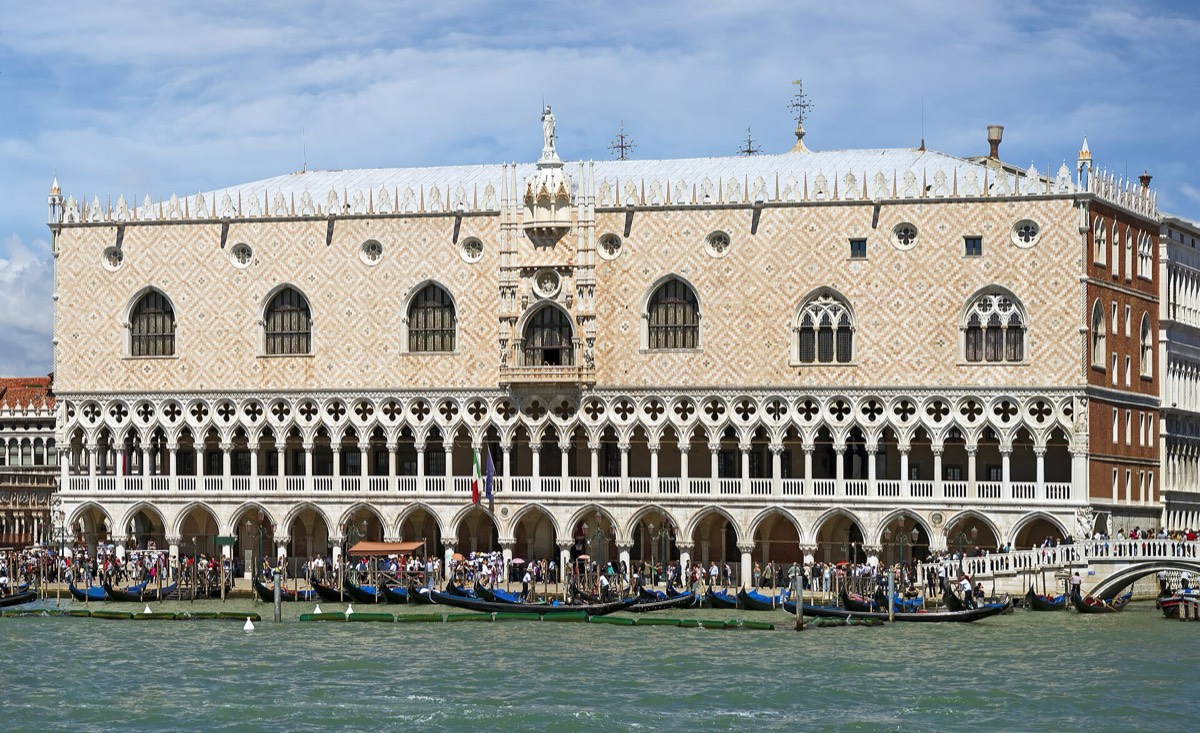
UNESCO World Heritage site since 1987Venice and its Lagoon
What entry costs
Why it's on the list
UNESCO lists a place when it meets at least one of ten criteria. Venice and its Lagoon meets five, in our own words:
A creative masterpiece
A masterpiece of human creativity.
Criterion (i)
An exchange of ideas
Shows ideas in architecture, art, technology or town planning passing between cultures.
Criterion (ii)
Rare evidence of a culture
Unique or rare evidence of a civilisation or cultural tradition, living or lost.
Criterion (iii)
A landmark of its kind
An outstanding example of a kind of building or landscape that marks a stage in human history.
Criterion (iv)
A traditional way of life
An outstanding example of how people have traditionally settled and used the land or sea.
Criterion (v)
On the map
Where the site is, and the places around it. Tap a dot for its price. Open the full map
Cultural Natural Mixed Other famous sights Prices checked In Danger
Map: OpenFreeMap, OpenMapTiles and OpenStreetMap contributors. Site positions from UNESCO's open data. "In Danger": on UNESCO's List of World Heritage in Danger.
Nearby
Within 100 km (62 miles), as the crow flies.
World Heritage sites
- Padua’s fourteenth-century fresco cyclesItaly · listed 202136 km (22 miles)From €16
- Botanical Garden (Orto Botanico), PaduaItaly · listed 199736 km (22 miles)From €15
- Le Colline del Prosecco di Conegliano e ValdobbiadeneItaly · listed 201958 km (36 miles)
- City of Vicenza and the Palladian Villas of the VenetoItaly · listed 199463 km (39 miles)From €12
- Ferrara, City of the Renaissance, and its Po DeltaItaly · listed 199587 km (54 miles)From €12
- Archaeological Area and the Patriarchal Basilica of AquileiaItaly · listed 199888 km (55 miles)From €12
Entry prices we've checked
- Scrovegni ChapelPadua, Italy36 km (22 miles)€16
- Padua Botanical Garden (Orto Botanico)Padua, Italy36 km (22 miles)€15
- Teatro OlimpicoVicenza, Italy63 km (39 miles)€12
- Castello EstenseFerrara, Italy87 km (54 miles)€12
- Aquileia BasilicaAquileia, Italy88 km (55 miles)€12
About the listing
- Country
- Italy
- Type
- Cultural
- Listed by UNESCO
- 1987
- Area
- 702 km² (271 square miles)
Questions
When did Venice and its Lagoon become a World Heritage site?
In 1987, when UNESCO added it to the World Heritage List.
Why is Venice and its Lagoon a World Heritage site?
UNESCO listed it for meeting five of its ten criteria: a masterpiece of human creativity; shows ideas in architecture, art, technology or town planning passing between cultures; unique or rare evidence of a civilisation or cultural tradition, living or lost; an outstanding example of a kind of building or landscape that marks a stage in human history; an outstanding example of how people have traditionally settled and used the land or sea.