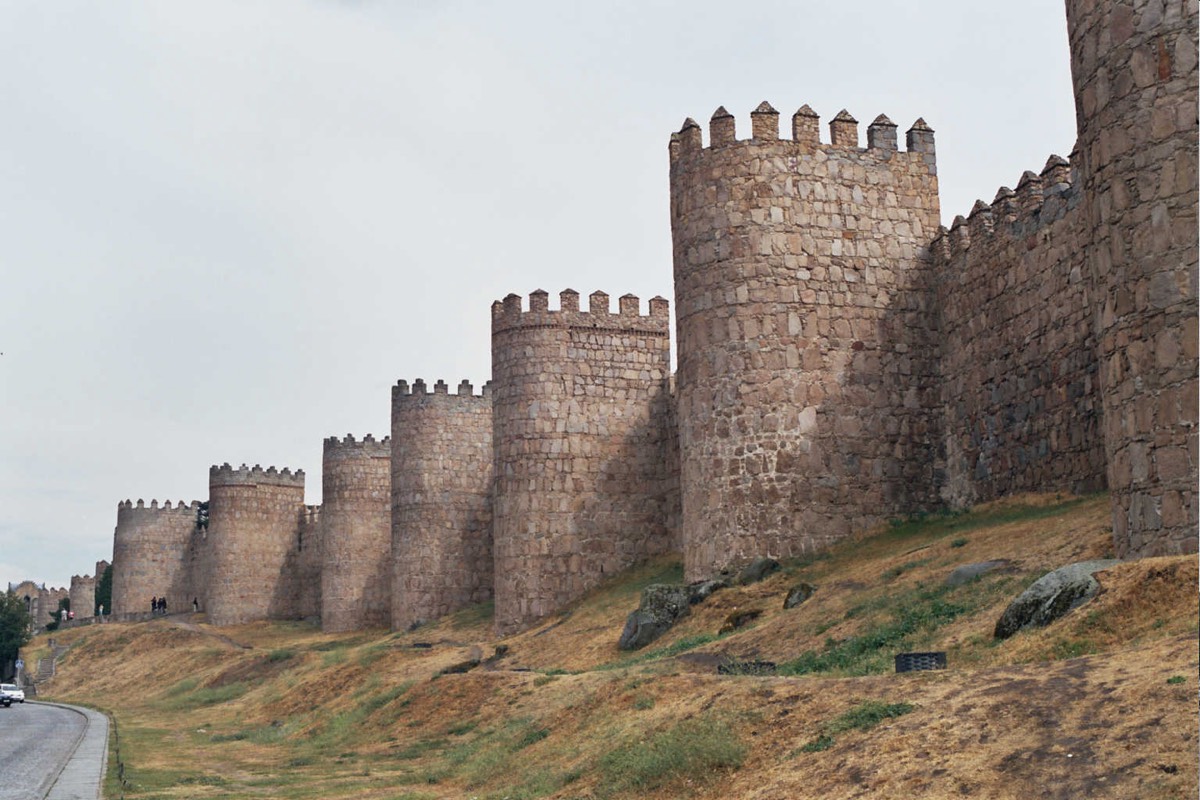
Spain · Cultural · 11 parts
UNESCO World Heritage site since 1985Old Town of Ávila with its Extra-Muros Churches
What entry costs
Why it's on the list
UNESCO lists a place when it meets at least one of ten criteria. Old Town of Ávila with its Extra-Muros Churches meets two, in our own words:
Rare evidence of a culture
Unique or rare evidence of a civilisation or cultural tradition, living or lost.
Criterion (iii)
A landmark of its kind
An outstanding example of a kind of building or landscape that marks a stage in human history.
Criterion (iv)
On the map
Where the site is, and the places around it. Tap a dot for its price. Open the full map
Cultural Natural Mixed Other famous sights Prices checked In Danger
Map: OpenFreeMap, OpenMapTiles and OpenStreetMap contributors. Site positions from UNESCO's open data. "In Danger": on UNESCO's List of World Heritage in Danger.
Nearby
Within 100 km (62 miles), as the crow flies.
World Heritage sites
- Monastery and Site of the Escurial, MadridSpain · listed 198447 km (29 miles)From €14
- Old Town of Segovia and its AqueductSpain · listed 198559 km (37 miles)From €13.50
- Old City of SalamancaSpain · listed 198888 km (55 miles)From €10
- Paseo del Prado and Buen RetiroSpain · listed 202190 km (56 miles)From €14
Entry prices we've checked
- Monastery of El EscorialSan Lorenzo de El Escorial, Spain47 km (29 miles)€14
- Alcázar of SegoviaSegovia, Spain58 km (36 miles)€13.50
- Royal Palace of MadridMadrid, Spain87 km (54 miles)€18
- Salamanca CathedralSalamanca, Spain88 km (55 miles)€10
- Thyssen-Bornemisza MuseumMadrid, Spain89 km (55 miles)€14
- Prado MuseumMadrid, Spain89 km (56 miles)€15
About the listing
- Country
- Spain
- Type
- Cultural
- Listed by UNESCO
- 1985
- Area
- 37 hectares (92 acres)
- Separate parts
- 11
Questions
When did Old Town of Ávila with its Extra-Muros Churches become a World Heritage site?
In 1985, when UNESCO added it to the World Heritage List.
Why is Old Town of Ávila with its Extra-Muros Churches a World Heritage site?
UNESCO listed it for meeting two of its ten criteria: unique or rare evidence of a civilisation or cultural tradition, living or lost; an outstanding example of a kind of building or landscape that marks a stage in human history.