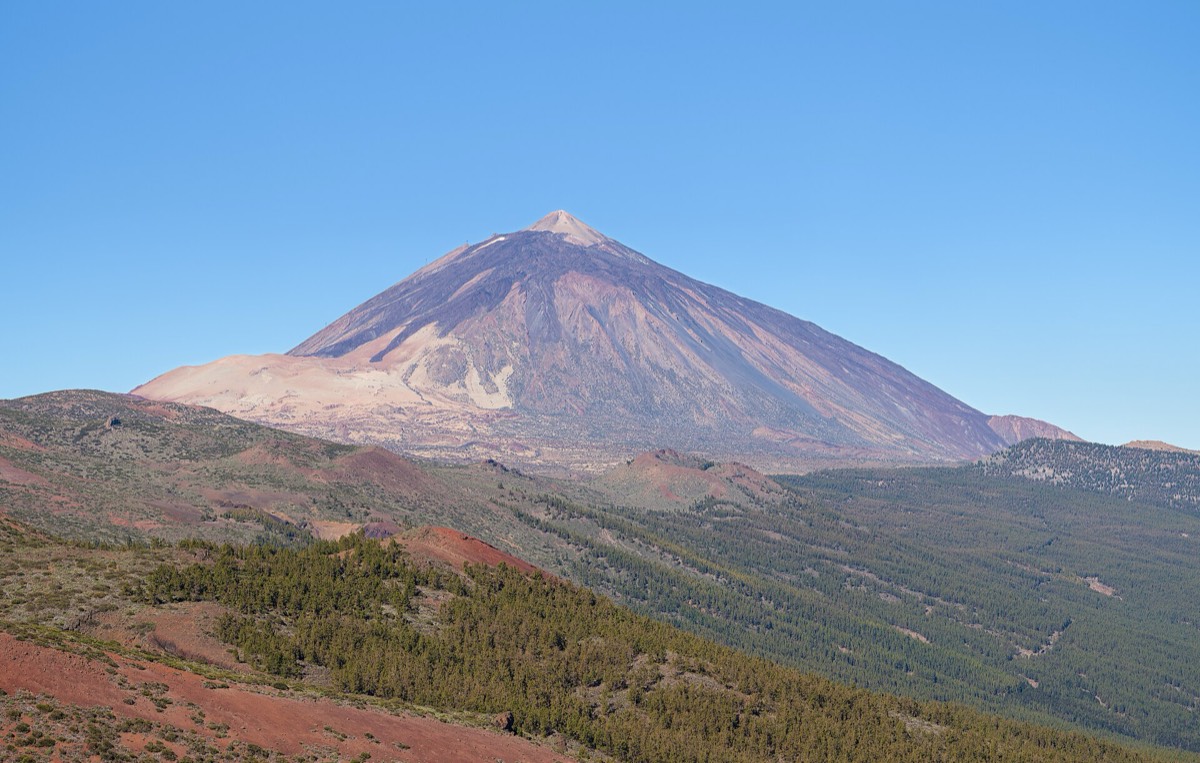
Spain · Natural
UNESCO World Heritage site since 2007Teide National Park
What entry costs
Why it's on the list
UNESCO lists a place when it meets at least one of ten criteria. Teide National Park meets two, in our own words:
Natural beauty
A natural wonder, or a landscape of exceptional beauty.
Criterion (vii)
Earth's history
A record of the Earth's history: its rocks, fossils and landforms.
Criterion (viii)
On the map
Where the site is, and the places around it. Tap a dot for its price. Open the full map
Cultural Natural Mixed Other famous sights Prices checked In Danger
Map: OpenFreeMap, OpenMapTiles and OpenStreetMap contributors. Site positions from UNESCO's open data. "In Danger": on UNESCO's List of World Heritage in Danger.
Nearby
Within 100 km (62 miles), as the crow flies.
World Heritage sites
- San Cristóbal de La LagunaSpain · listed 199940 km (25 miles)
- Garajonay National ParkSpain · listed 198660 km (38 miles)
- Risco Caido and the Sacred Mountains of Gran Canaria Cultural LandscapeSpain · listed 2019100 km (62 miles)
About the listing
- Country
- Spain
- Type
- Natural
- Listed by UNESCO
- 2007
- Area
- 190 km² (73 square miles)
Questions
When did Teide National Park become a World Heritage site?
In 2007, when UNESCO added it to the World Heritage List.
Why is Teide National Park a World Heritage site?
UNESCO listed it for meeting two of its ten criteria: a natural wonder, or a landscape of exceptional beauty; a record of the Earth's history: its rocks, fossils and landforms.