Japan · Cultural
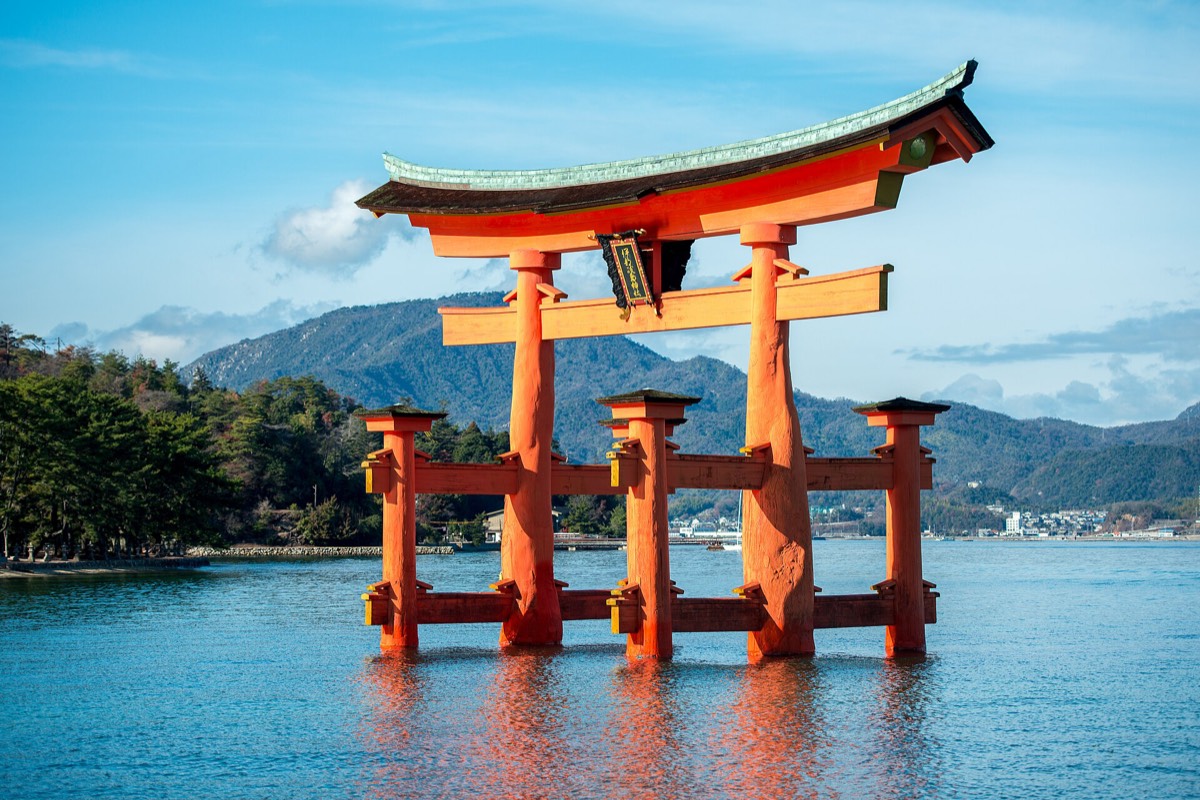
UNESCO World Heritage site since 1996Itsukushima Shinto Shrine
What entry costs
Why it's on the list
UNESCO lists a place when it meets at least one of ten criteria. Itsukushima Shinto Shrine meets three, in our own words:
A creative masterpiece
A masterpiece of human creativity.
Criterion (i)
An exchange of ideas
Shows ideas in architecture, art, technology or town planning passing between cultures.
Criterion (ii)
A landmark of its kind
An outstanding example of a kind of building or landscape that marks a stage in human history.
Criterion (iv)
On the map
Where the site is, and the places around it. Tap a dot for its price. Open the full map
Cultural Natural Mixed Other famous sights Prices checked In Danger
Map: OpenFreeMap, OpenMapTiles and OpenStreetMap contributors. Site positions from UNESCO's open data. "In Danger": on UNESCO's List of World Heritage in Danger.
Nearby
Within 100 km (62 miles), as the crow flies.
World Heritage sites
- Hiroshima Peace Memorial (Genbaku Dome)Japan · listed 199616 km (10 miles)From ¥200
- Sites of Japan’s Meiji Industrial Revolution: Iron and Steel, Shipbuilding and Coal MiningJapan · listed 201585 km (53 miles)
- Iwami Ginzan Silver Mine and its Cultural LandscapeJapan · listed 200792 km (57 miles)
Entry prices we've checked
- Hiroshima Peace Memorial MuseumHiroshima, Japan16 km (10 miles)¥200
About the listing
- Country
- Japan
- Type
- Cultural
- Listed by UNESCO
- 1996
- Area
- 4.3 km² (1.7 square miles)
Questions
When did Itsukushima Shinto Shrine become a World Heritage site?
In 1996, when UNESCO added it to the World Heritage List.
Why is Itsukushima Shinto Shrine a World Heritage site?
UNESCO listed it for meeting three of its ten criteria: a masterpiece of human creativity; shows ideas in architecture, art, technology or town planning passing between cultures; an outstanding example of a kind of building or landscape that marks a stage in human history.