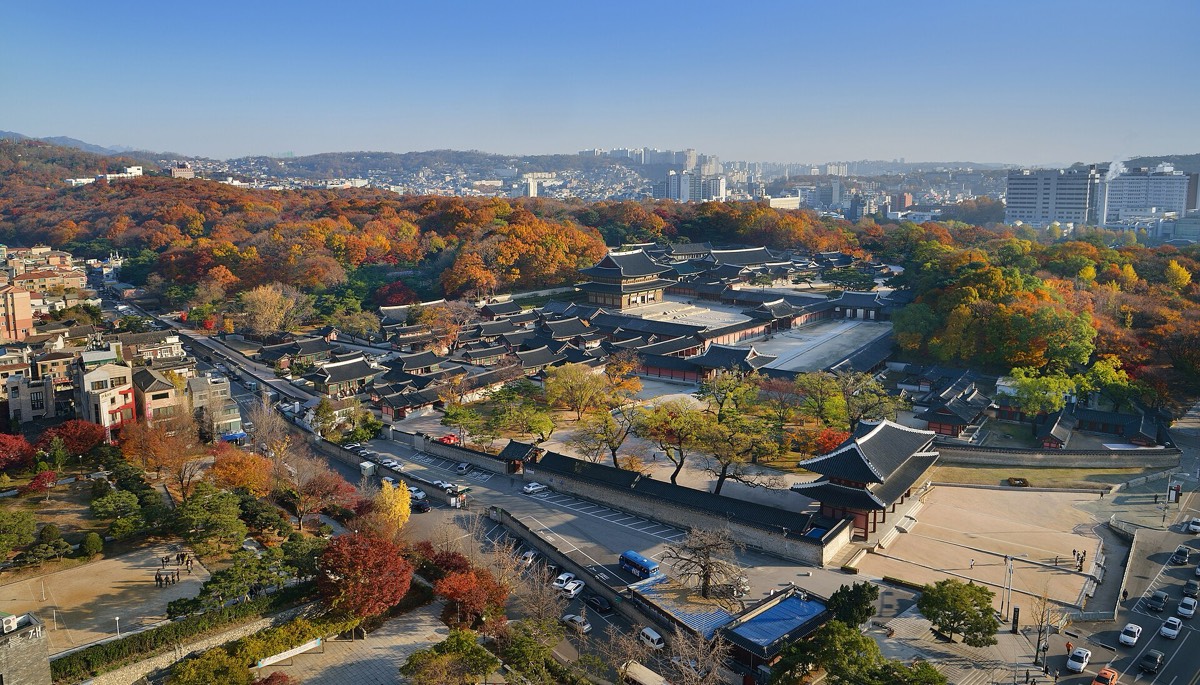
South Korea · Cultural
UNESCO World Heritage site since 1997Changdeokgung Palace Complex
What entry costs
Why it's on the list
UNESCO lists a place when it meets at least one of ten criteria. Changdeokgung Palace Complex meets three, in our own words:
An exchange of ideas
Shows ideas in architecture, art, technology or town planning passing between cultures.
Criterion (ii)
Rare evidence of a culture
Unique or rare evidence of a civilisation or cultural tradition, living or lost.
Criterion (iii)
A landmark of its kind
An outstanding example of a kind of building or landscape that marks a stage in human history.
Criterion (iv)
On the map
Where the site is, and the places around it. Tap a dot for its price. Open the full map
Cultural Natural Mixed Other famous sights Prices checked In Danger
Map: OpenFreeMap, OpenMapTiles and OpenStreetMap contributors. Site positions from UNESCO's open data. "In Danger": on UNESCO's List of World Heritage in Danger.
Nearby
Within 100 km (62 miles), as the crow flies.
World Heritage sites
- Jongmyo ShrineSouth Korea · listed 1995Under 1 kmFrom ₩1,000
- NamhansanseongSouth Korea · listed 201420 km (12 miles)
- Hwaseong FortressSouth Korea · listed 199734 km (21 miles)From ₩2,000
- Historic Monuments and Sites in KaesongNorth Korea · listed 201362 km (38 miles)
Entry prices we've checked
- Jongmyo ShrineSeoul, South KoreaUnder 1 km₩1,000
- Gyeongbokgung PalaceSeoul, South Korea1 km (1 mile)₩3,000
- N Seoul TowerSeoul, South Korea3 km (2 miles)₩29,000
- Seoul Sky (Lotte World Tower)Seoul, South Korea12 km (8 miles)₩33,000
- Hwaseong Haenggung PalaceSuwon, South Korea33 km (21 miles)₩2,000
About the listing
- Country
- South Korea
- Type
- Cultural
- Listed by UNESCO
- 1997
Questions
When did Changdeokgung Palace Complex become a World Heritage site?
In 1997, when UNESCO added it to the World Heritage List.
Why is Changdeokgung Palace Complex a World Heritage site?
UNESCO listed it for meeting three of its ten criteria: shows ideas in architecture, art, technology or town planning passing between cultures; unique or rare evidence of a civilisation or cultural tradition, living or lost; an outstanding example of a kind of building or landscape that marks a stage in human history.